Buying Heavy Equipment Machinery is not just a price comparison. It is a decision about uptime, operating costs, job requirements, and resale value. A machine that looks affordable on paper can become expensive when it sits idle or needs frequent repairs. The details matter: hours on the meter, tire or track wear, service records, parts availability, and the distance to a qualified technician.
McKinsey Global Institute’s 2017 report, Reinventing Construction, found that construction productivity had grown by about 1% annually over the previous two decades. That figure is industry-wide, not a guarantee about any single machine. Still, it highlights why equipment selection deserves careful attention. Construction equipment management specialist Mike Vorster’s work emphasizes evaluating equipment through its ownership and operating economics, rather than purchase price alone. In practical terms, compare expected utilization, fuel use, maintenance, financing, and resale value before committing. Check the assumptions. They can be wrong.
This guide offers 10 tips for comparing new and used machines, assessing dealers, and matching capacity to real workloads. It also covers inspection questions, warranties, financing terms, and the value of a dependable service network. Bring a checklist to the yard. Look closely at leaks, worn pins, damaged hoses, and uneven tire wear. Ask for maintenance documentation, then verify it where possible. No checklist removes every risk, and a clean machine is not automatically a sound investment. The goal is a better-informed purchase—one that fits the work, budget, and people who will operate it.
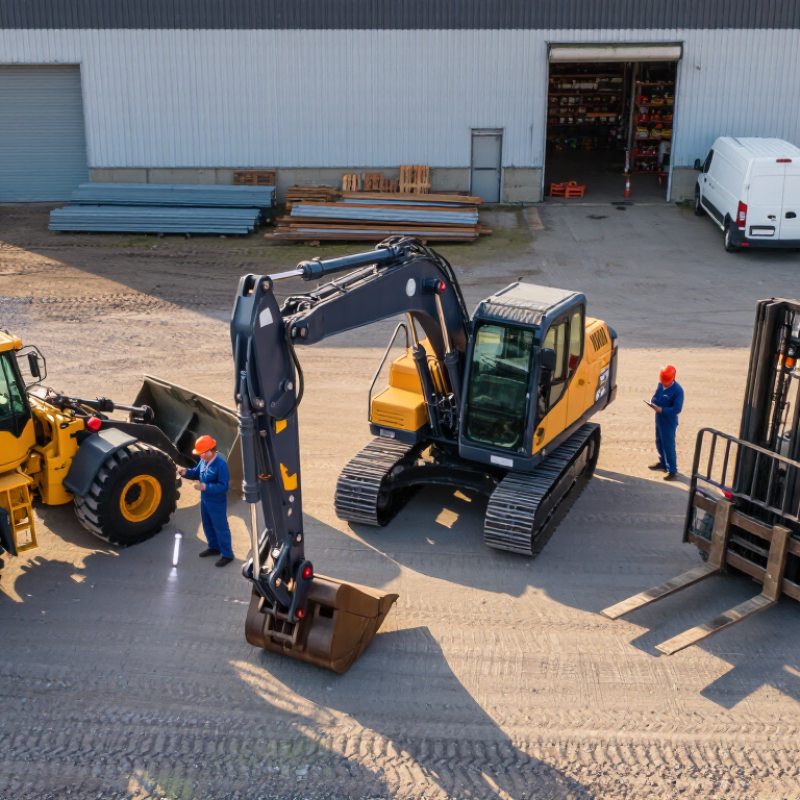
Define the job before choosing a machine. Record material type, estimated volume, lift height, travel distance, ground conditions, access width, and expected hours per shift. A loader suited to a firm gravel pad may struggle on wet soil; a long-reach excavator may be unnecessary in a tight urban lot. Check the heaviest expected load, not just the average. McKinsey Global Institute’s 2017 report, Reinventing Construction, found that construction labor productivity grew about 1% annually over two decades. Better equipment fit cannot fix every productivity issue, but it can limit avoidable waiting and rework.
Tip: Walk the site with a tape measure and a simple route sketch. Note narrow gates, overhead lines, soft shoulders, and turning space. Then match each task to the machine’s capacity, reach, attachments, and transport needs. Small details matter.
Compare options using the same work plan. Estimate daily output, fuel use, delivery costs, and likely idle hours; ask suppliers for operating specifications and verify them against the site conditions. If the project has several phases, rental may suit short, changing tasks, while ownership may fit steady utilization. These estimates are imperfect. Recheck them when weather, access, or the schedule changes, and keep a little room for conditions your initial survey missed.

A machine’s headline capacity can be misleading. Check the load chart at the height and reach your work actually requires, not just the maximum figure in a brochure. A compact excavator, for example, may handle a bucket load easily but struggle with a heavier attachment. Compare operating weight, lifting capacity, engine output, and attachment requirements side by side. That matters. Leave room for uneven ground and changing loads; working at the limit can reduce stability and slow the job. I used to focus too much on peak capacity. It is an easy mistake.
Operating conditions deserve the same attention as specifications. Note the surface, slope, available turning space, and typical weather at the job site. Soft soil may call for lower ground pressure, while narrow access can rule out a machine that looks ideal on paper. Check fuel or energy use under comparable workloads, service intervals, and whether routine checks are easy to reach. Small details count. A machine may fit the task but not the shift: long travel distances, frequent stops, or limited operator visibility can affect productivity. Compare the numbers with the actual work plan, and flag any assumptions you cannot verify.
Treat the inspection as a working check, not a quick walk-around. On a new machine, inspect for transport damage, confirm fluid levels, and test every control and attachment. Ask for the delivery checklist and verify that the listed configuration matches the machine in front of you. Small discrepancies can become expensive delays.
For a used machine, look closely at hydraulic hoses, cylinder rods, pivot pins, tires or tracks, and the frame around high-stress joints. Start it cold if possible, then watch for smoke, unusual vibration, slow hydraulics, or warning lights. Cold starts matter. Check the hour meter against dated service invoices and repair notes; consistent entries are more useful than a thick folder with missing months. Records should identify the machine and describe the work, parts, and hours. Ask about repeated repairs, not just the latest one. A clean cab can hide hard use. That is worth remembering. If the seller cannot explain gaps or hour-meter differences, pause and arrange an independent inspection under load. Record any faults and get repair estimates before comparing the asking price with similar machines.
| Tip | Assessment Area | What to Inspect | Records and Evidence to Review | Decision Signal |
|---|---|---|---|---|
| 1 | Match the machine to the job | Compare operating weight, lifting or digging capacity, dimensions, attachments, and site access needs with the planned work. | Machine specifications, attachment details, and the requirements of the intended tasks. | Proceed when the machine’s rated capabilities and configuration suit the work; do not rely on appearance or maximum figures alone. |
| 2 | Verify identity and configuration | Check the identification plate and serial or PIN markings, and confirm that major components and attachments match the listing. | Ownership and sales documents, equipment records, and any available build or configuration information. | Resolve mismatched, altered, unreadable, or undocumented identifiers before committing to a purchase. |
| 3 | Inspect the structure | Look for cracks, fresh welds, distortion, corrosion, loose fasteners, and damage around the frame, boom, stick, bucket, or other load-bearing areas. | Repair invoices, inspection reports, and explanations of structural repairs or modifications. | Ask a qualified inspector to assess significant repairs, cracks, or deformation before purchase. |
| 4 | Check the engine and fluids | Inspect for leaks, unusual smoke, abnormal noise, difficult starting, and fluid contamination. Check fluid levels according to the operating manual. | Engine service entries, oil and filter changes, diagnostic reports, and records of major repairs. | Investigate warning signs and request appropriate testing; a clean exterior alone does not establish mechanical condition. |
| 5 | Evaluate the hydraulic system | Examine hoses, cylinders, fittings, and pumps for leaks or damage; operate functions and note hesitation, drift, or inconsistent movement. | Hydraulic service records, component replacement details, and any available pressure or diagnostic test results. | Have suspected leaks, weak functions, or unexplained movement diagnosed by a qualified technician. |
| 6 | Assess undercarriage and tires | On tracked machines, inspect track links, rollers, sprockets, and shoes for wear or damage. On wheeled machines, inspect tires, rims, and signs of uneven wear. | Undercarriage or tire inspection notes, replacement invoices, and maintenance records. | Document visible wear and obtain a repair estimate, since replacement needs can affect the total cost of ownership. |
| 7 | Test all operating functions | Operate the machine through its functions, including steering, braking, travel, controls, lights, alarms, and attachments, where safe and permitted. | Pre-delivery inspection results, fault-code reports, and records of unresolved defects. | Arrange a controlled operational test and investigate faults rather than assuming they are minor. |
| 8 | Review hours and service history | Compare the displayed hour-meter reading with available service entries and assess whether the wear visible on the machine is consistent with its reported use. | Dated maintenance logs, work orders, hour-meter readings, and records of meter replacement or repair. | Look for a consistent, traceable history. Treat unexplained gaps or conflicting readings as items requiring verification. |
| 9 | Compare new and used purchase terms | For new equipment, confirm configuration, delivery condition, included items, and warranty terms. For used equipment, assess condition, remaining life, and likely repairs. | Written quotation or sale agreement, warranty details, inspection findings, and a list of included attachments and accessories. | Compare total expected costs and protections, not just the purchase price. Confirm all important terms in writing. |
| 10 | Arrange an independent inspection | Have a qualified heavy-equipment technician inspect the machine and conduct suitable tests before final payment, especially if it is used or has limited records. | Written inspection report, test results, repair estimates, and documented answers to outstanding questions. | Use the findings to negotiate, request repairs, or decline the purchase if important risks remain unresolved. |
Tip 1: Calculate the full ownership cost, not just the advertised price. Include delivery, setup, insurance, fuel, routine service, repairs, and storage. Estimate annual operating hours using your actual workload, then compare the cost per hour across machines. Ask for written service estimates and check the recommended intervals. Small items add up. A spreadsheet helps, but its assumptions can be wrong; fuel use and repair costs may rise when conditions change.
Tip 2: Compare financing offers by total repayment, not monthly payment alone. Review the interest rate, fees, down payment, term, and any final payment due. Match the payment schedule to seasonal cash flow, especially if work slows during winter. Keep room in the budget for unexpected repairs. Lower payments can mean higher overall costs. Before signing, test a tougher scenario: fewer operating hours, delayed customer payments, or a costly service visit.
Tip 3: Estimate resale value realistically. Check recent sales for similar age, hours, condition, and configuration, rather than relying only on asking prices. Keep maintenance records, repair invoices, and clear photos; these help a future buyer assess the machine. Wear matters. Consider how transport costs and visible damage could narrow your buyer pool. Resale estimates are uncertain, so avoid building a purchase decision around an optimistic figure. If the numbers only work under perfect conditions, revisit them.
Before paying a deposit, verify that the seller is authorized to sell the machine. Ask for business details, ownership records, maintenance logs, and references from recent buyers. Match the equipment’s serial number to its paperwork, then arrange an independent inspection if possible. Tip: Get important claims in writing. A polished listing can still leave gaps, and I would not treat a quick phone call as proof.
Read the warranty carefully, not just the headline coverage period. Check what parts are excluded, who pays for labor and transport, and how quickly a repair request must be reported. Confirm whether coverage starts at purchase or delivery, and whether used components are treated differently. Small print matters. Even a thorough review can miss a vague phrase, so ask the seller to clarify it in writing before signing.
Set delivery terms before the machine leaves the yard. Specify the delivery address, date window, loading arrangements, unloading equipment, and who carries risk during transport. Confirm who pays for delays or access problems, especially if a low loader needs a firm turning area. Take dated photos when the machine arrives, and note visible damage before accepting delivery. One overlooked detail can become an expensive argument.