What Are the 2026 Best Construction Vehicles?
Choosing the 2026 best construction vehicles requires more than comparing horsepower or purchase prices. Jobsite conditions often reveal the truth. A powerful excavator may struggle on narrow urban projects, while a compact loader can become the more productive choice. This guide examines Construction Vehicles through practical criteria, including fuel efficiency, lifting capacity, operator comfort, safety systems, service access, and long-term operating costs.
Real-world performance matters. Mud, uneven ground, winter temperatures, and repeated loading cycles can expose weaknesses that brochures rarely mention. The evaluation considers manufacturer specifications, field reports, maintenance experience, and feedback from equipment professionals. Electric models also deserve attention, especially where noise and emissions are concerns. However, charging time and battery performance still require careful planning. New does not always mean better.
The strongest machines balance capability with reliability. They should start consistently, protect operators, and reduce unnecessary downtime. A reliable dealer network can matter as much as a few extra kilowatts. Some rankings remain debatable because every contractor measures value differently. That is worth admitting. A road builder, demolition crew, and residential contractor may choose three different winners. This overview highlights likely leaders while explaining where each machine fits best, what it costs to operate, and which limitations deserve closer inspection before purchase. Expect practical comparisons, not perfect answers.
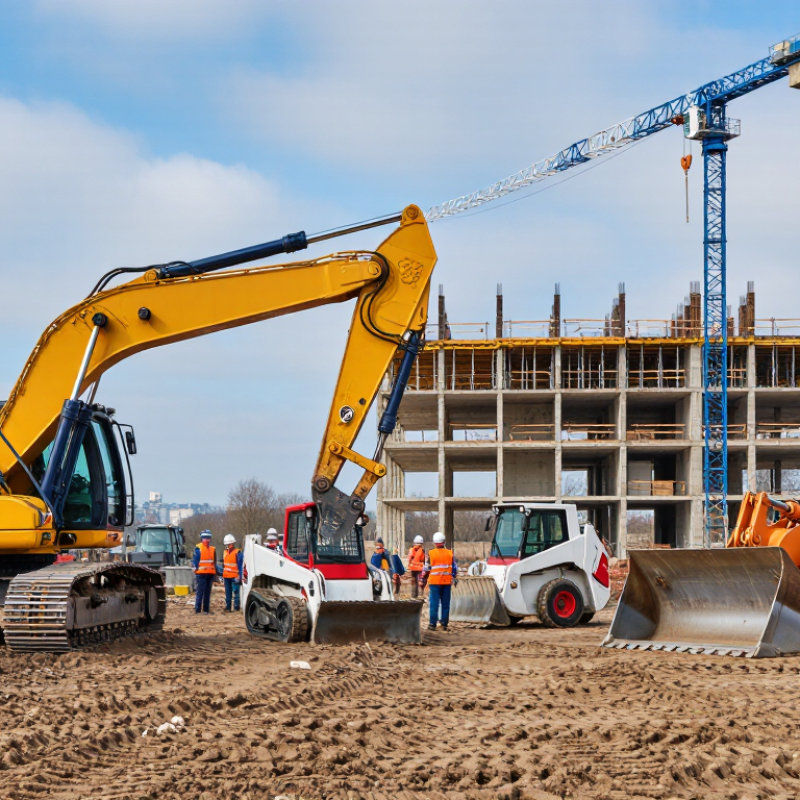
2026 Construction Vehicle Rankings: Power, Payload, Fuel Use, and Uptime
What Are the 2026 Best Construction Vehicles?
The strongest 2026 construction vehicles should balance power, payload, fuel use, and uptime. Power alone can mislead. A 250-horsepower machine may lose efficiency when its attachment remains oversized. The 2025 EquipmentWatch Cost Recovery Handbook shows that hourly ownership and operating costs strongly influence equipment value. Therefore, ranking should measure output per fuel gallon, not engine size alone.
Payload remains critical on earthmoving sites. A useful benchmark compares rated payload with cycle time, ground conditions, and transport distance. The U.S. Environmental Protection Agency’s NONROAD emissions model confirms that duty cycles greatly affect fuel consumption. Two similar machines can burn very different amounts of diesel. That detail is often ignored.
Uptime needs hard evidence. Telematics reports should track idle time, fault codes, service intervals, and missed production hours. The Association of Equipment Management Professionals promotes standardized telematics data for more reliable fleet comparisons. EPA Tier 4 Final standards can reduce particulate matter and nitrogen oxides by up to 90 percent versus older engine tiers, depending on horsepower. Cleaner operation matters, but filters and sensors also require disciplined maintenance. That is the uncomfortable trade-off. Electric and hybrid units may lower site emissions, yet charging access and battery downtime remain practical concerns. My provisional 2026 ranking favors machines with stable payload, low idle fuel use, documented service support, and verified availability—not impressive brochure figures.
Excavators: Comparing 30–40-Tonne Machines by Digging Force and Output
What Are the 2026 Best Construction Vehicles?
Excavators: Comparing 30–40-Tonne Machines by Digging Force and Output
For 2026, 30–40-tonne excavators remain strong choices for deep foundations, quarry work, and major drainage. Their working weight usually supports bucket digging forces between 220 and 300 kilonewtons. Arm crowd force often sits near 130–190 kilonewtons. These figures follow measurement principles outlined in ISO 6015:2018. Maximum force alone does not guarantee faster excavation.
The U.S. Army Corps of Engineers’ EM 1110-2-1304 uses bucket volume, fill factor, cycle time, and job efficiency for production estimates. A 1.6–2.2-cubic-metre bucket can theoretically move over 200 cubic metres per hour. Real output commonly falls near 110–170 cubic metres hourly. Congested spoil areas, wet clay, and long swing angles reduce production quickly. A 50-minute productive hour is a safer planning assumption.
Field checks matter more than brochure figures. In dense clay, I would compare penetration force and cycle recovery, not just engine power. A machine completing a 27-second cycle may outperform a stronger excavator taking 34 seconds. That difference becomes substantial after eight working hours. Still, the estimate is imperfect. Operator skill, bucket teeth, ground moisture, and truck spacing can change results by 20% or more. Telematics reports should verify idle time and actual hydraulic loading before contractors select the highest-rated model.
Wheel Loaders and Dozers: Evaluating 20–40-Tonne Payload and Blade Capacity
What Are the 2026 Best Construction Vehicles?
Wheel loaders and dozers remain central to demanding earthmoving projects. For 20–40-tonne payload work, a wheel loader needs more than a large bucket. Its operating weight, hydraulic strength, tire grip, and tipping load must work together. On a wet haul road, traction can matter more than advertised power. A 30-tonne payload may look suitable on paper, yet uneven ground can reduce safe productivity.
Dozers require a different evaluation. Their blade capacity depends on blade width, height, material density, and the machine’s pushing force. A heavy straight blade can cut compacted soil sharply. A larger angled blade may move more loose material per pass. Field checks should include undercarriage wear, cooling performance, visibility, and control response. Small weaknesses become expensive during long shifts. I have seen clean specifications fail against poor site access.
Tips: Match loader bucket size to the truck cycle, not only the material pile. Check payload scales regularly. For dozers, test blade control under real ground resistance. Leave room for unexpected moisture. Perfect estimates rarely survive changing site conditions.
Operator skill also affects capacity. Smooth loading reduces spillage and tire strain. Controlled dozing protects the cutting edge and lowers fuel use. Maintenance records deserve equal attention, especially for hydraulic leaks, track tension, and frame cracks. A slightly smaller machine can outperform a larger one when transport limits, fuel supply, and service access are considered.
Cranes and Haul Trucks: Measuring Lift Capacity, Payload, and Cycle Time
Choosing the 2026 best construction vehicles requires more than comparing brochure numbers. On a real site, crane lift capacity changes with boom length, working radius, ground stability, and wind. A crane rated for 100 tonnes may lift far less at a long radius. Operators should check the load chart, rigging weight, and setup conditions before every critical lift. Small errors become expensive quickly.
Haul trucks need the same practical examination. Payload is not simply the largest permitted figure. Material density, moisture, road gradient, and tire condition affect safe output. A truck carrying 40 tonnes of dry aggregate may carry less wet clay without exceeding its body volume or axle limits.
Cycle time gives the clearest comparison. Record loading, travel, dumping, and return time across several runs. Then compare tonnes moved per hour, not only truck size.
Field testing often reveals uncomfortable gaps. Our first cycle-time sheet looked precise, but it ignored waiting beside the loader. That omission changed the result. GPS data can help, yet human observations still explain delays, uneven roads, and cautious maneuvering.
A useful evaluation pairs measured capacity with fuel use, operator visibility, maintenance access, and site safety. The fastest vehicle is not always the most productive. Sometimes a smaller machine completes more cycles because it turns easily and spends less time idle.
Weather can disrupt the cleanest calculation. Recheck the numbers.
Electric and Autonomous Equipment: Comparing Zero-Emission Range and TCO
What Are the 2026 Best Construction Vehicles?
Electric and autonomous equipment should be judged by site economics, not novelty. BloombergNEF’s 2024 Battery Price Survey recorded an average battery-pack price of $115 per kWh, down 20% year on year. That decline improves purchase-cost forecasts, but battery replacement remains a serious uncertainty.
Range remains awkward. A mid-sized electric excavator may cover a normal shift under moderate loads, yet continuous digging, cold weather, and poor charging access reduce usable hours. The International Energy Agency reports that battery-electric vehicles are expanding rapidly across transport, but construction machines face heavier duty cycles. A practical fleet plan needs charging records, not optimistic brochure estimates.
Consider an illustrative comparison. A diesel machine using 15 litres hourly costs $18 at $1.20 per litre. An electric equivalent using 40 kWh costs $6 at $0.15 per kWh. Maintenance, battery financing, and charging losses can narrow that gap. The calculation is incomplete without local electricity prices.
Autonomous equipment changes utilization more than energy consumption. Route control, grade sensing, and remote supervision can reduce idle time and improve night-shift consistency. McKinsey’s 2024 analysis of industrial automation highlights productivity gains from connected workflows, but construction sites remain less predictable than factories. Sensors get dirty. Data links fail. That changes the math.
The best 2026 vehicle may therefore be a mixed-fleet choice: electric for repeatable urban work, autonomous assistance for controlled tasks, and conventional equipment where range risk still dominates. I would not promise a universal winner. The weak point is infrastructure.
What Are the 2026 Best Construction Vehicles?
Electric and autonomous equipment compared by zero-emission operating range and five-year total cost of ownership.
The benchmark uses typical commercially documented operating ranges for battery-electric construction equipment. TCO is shown as an index where a comparable diesel machine equals 100; lower values indicate lower five-year ownership and operating cost. Actual results vary with duty cycle, charging access, electricity prices, utilization, and battery replacement assumptions.

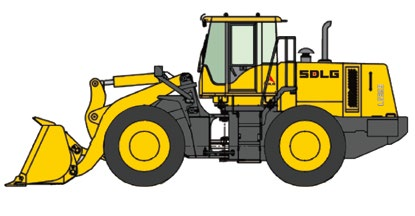 Wheel Loader
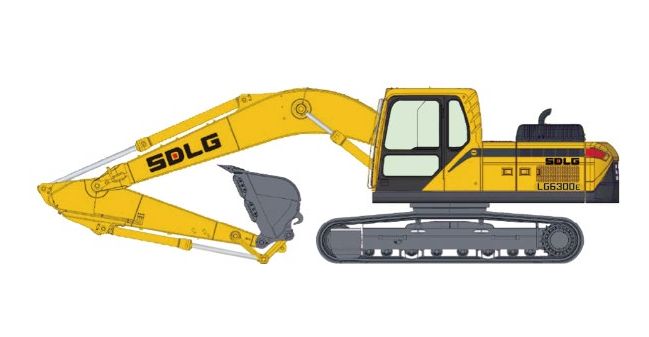 Excavator
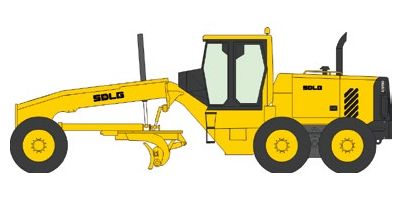 Motor Grader
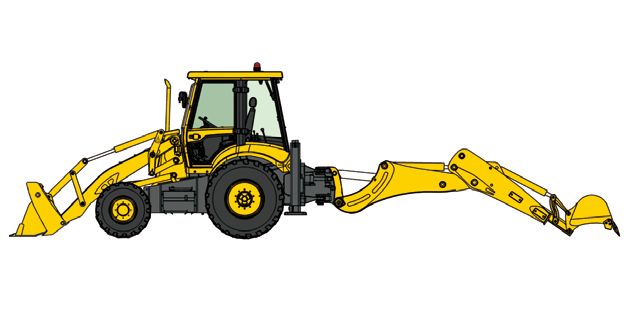 Backhoe Loader
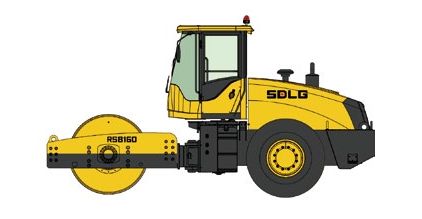 Road Roller
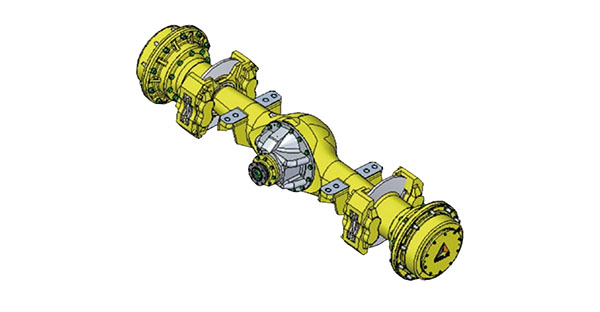 Spare Parts