Leave Your Message

Top 10 Construction Vehicles for Global Buyers

Choosing the right Construction Vehicles can shape a project’s safety, productivity, and long-term operating costs. Global buyers face different ground conditions, regulations, labor skills, and service expectations. A compact excavator may work efficiently in a narrow European street, while a larger crawler excavator suits demanding earthworks on remote sites. The machine must match the job, not simply the advertised horsepower.

This guide presents ten widely used construction machines, including excavators, wheel loaders, bulldozers, cranes, dump trucks, and compactors. Each vehicle offers practical strengths, but every choice requires careful checking. Buyers should compare operating weight, bucket capacity, fuel use, hydraulic performance, cab visibility, and attachment compatibility. Parts availability matters greatly when a machine works hundreds of kilometers from a dealer. So does technician support.

Small details often decide performance. A loader with excellent traction can save time on wet clay. A crane with precise controls can improve placement around crowded structures. A dump truck with poor local support may become an expensive obstacle. Safety systems, certified components, maintenance access, and operator training deserve equal attention.

There is no perfect ranking.

Market data and user experience can also vary by region. A vehicle trusted on one continent may be less practical elsewhere because of climate, road limits, or service networks. This overview offers a reliable starting point, not a substitute for site assessment. Careful buyers should confirm specifications with manufacturers and local distributors before signing a purchase agreement.
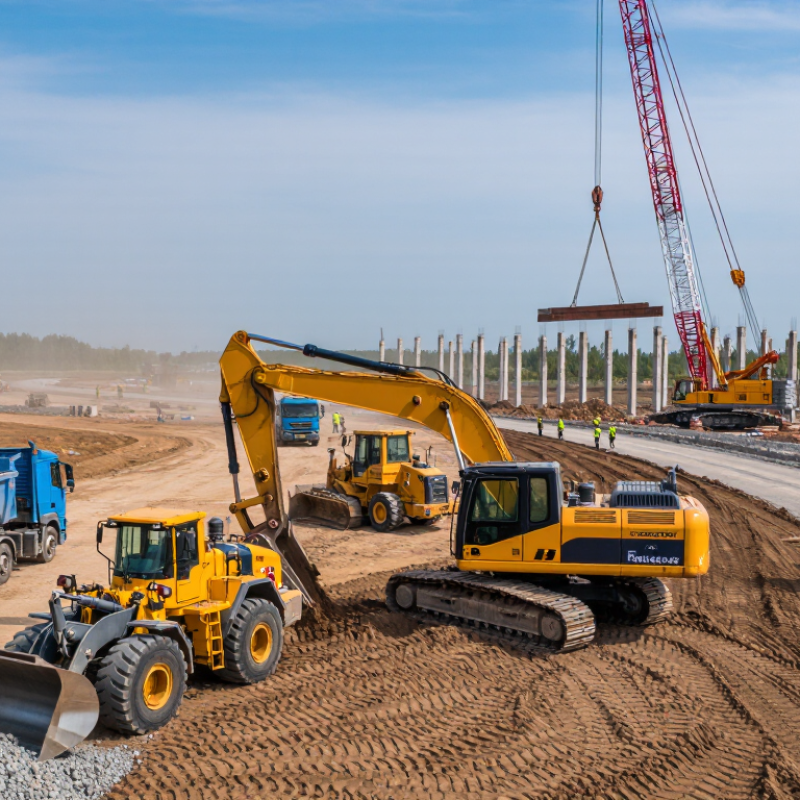
Top 10 Construction Vehicles for Global Buyers

Construction Vehicle Categories and Their Core Functions

Construction vehicle selection starts with function, not appearance. An excavator digs trenches, removes soil, and loads trucks. A bulldozer pushes earth across short distances. Wheel loaders move aggregates quickly between stockpiles and hoppers. Backhoe loaders combine digging and loading for smaller urban sites. Motor graders create accurate road surfaces. Scrapers cut, carry, and spread soil over longer areas.

Dump trucks transport rocks, sand, and excavated material. Cranes lift steel, panels, and heavy structural components vertically. Piling rigs prepare deep foundations where surface soil lacks strength. Concrete mixers and pumps deliver fresh concrete into slabs, columns, and restricted spaces. Off-Highway Research reported that global construction equipment sales remained above one million units annually in its 2024 market review. That figure shows strong demand, but it hides major differences in terrain, fuel access, and operator skill.

Tips: Match machine size to the task, haul distance, and ground condition. A large excavator may look productive, yet idle during narrow-site work. Check rated capacity, attachment compatibility, maintenance records, and local parts availability. Deloitte’s 2024 Engineering and Construction Industry Outlook highlights continuing pressure on productivity and project costs. Telematics can monitor fuel use and idle time, but data does not replace daily inspections. In practice, buyers sometimes choose horsepower too quickly. That choice can increase transport costs and damage soft ground. Smaller equipment may be slower, but it can work more safely around existing structures.
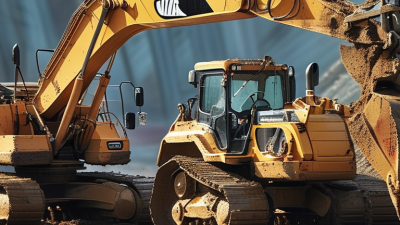
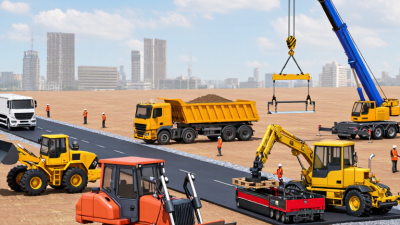
Excavators, Loaders, and Backhoe Loaders Compared

Top 10 Construction Vehicles for Global Buyers: Excavators, Loaders, and Backhoe Loaders Compared

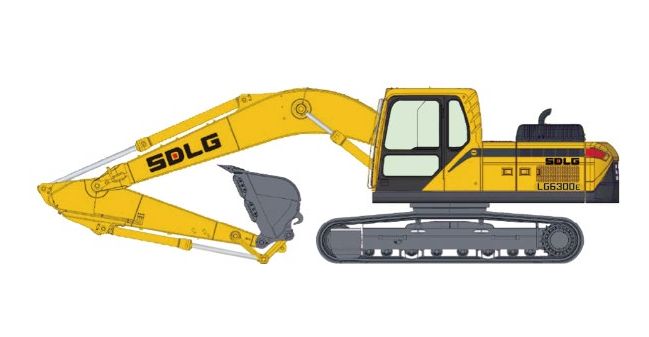
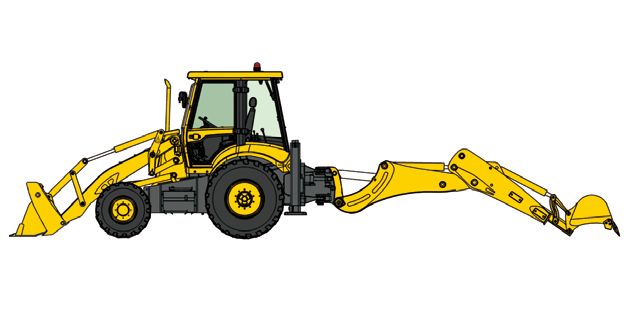
Excavators, loaders, and backhoe loaders serve different working rhythms. An excavator is strongest for deep trenching, foundation work, and controlled demolition. Its boom reaches below the machine, while a 360-degree upper structure improves positioning on crowded sites. A loader works faster when moving soil, gravel, or waste across short distances. Its bucket fills quickly, but it is less suitable for narrow, deep excavation. A backhoe loader combines both functions. It can dig trenches, lift materials, and travel between small projects without transport support. That flexibility is valuable for global buyers. However, the compromise is real. It rarely matches a dedicated excavator or loader in demanding conditions.

Tips: Check operating weight, bucket capacity, digging depth, hydraulic flow, and local service access. Ask for cold-start performance if the machine will work in northern regions. In hot climates, inspect cooling capacity and dust protection. Fuel use matters daily. Purchase price does not tell the whole story.

From field comparisons, tire loaders suit paved yards and frequent relocation, while tracked excavators handle soft ground more confidently. Backhoe loaders fit utility repairs and municipal maintenance, especially where space is limited. Cabin visibility, joystick comfort, ground clearance, and attachment compatibility deserve equal attention. A machine can look powerful yet feel inefficient after eight hours. Buyers should also verify safety systems, emissions requirements, operator training support, and spare-parts availability. Some specifications are easy to compare; actual productivity is not. Local soil, operator skill, weather, and transport costs can change the result. Test the machine before committing, when possible.

Bulldozers, Graders, and Scrapers for Earthmoving

Top 10 Construction Vehicles for Global Buyers

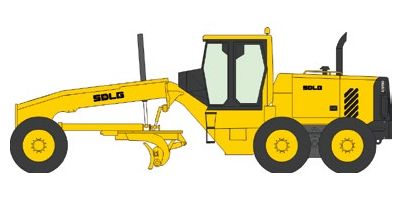
Bulldozers, graders, and scrapers remain core earthmoving machines for global projects. Bulldozers push rock, soil, and demolition debris across short distances. Their wide tracks improve traction on wet or uneven ground. Graders create precise slopes for highways, drainage channels, and airport surfaces. Scrapers cut, carry, and spread soil efficiently across longer sites.

According to Grand View Research, the global construction equipment market was valued at approximately USD 232.9 billion in 2023. The report also forecasts continued growth through 2030. This supports demand for productive earthmoving fleets. However, market size alone should not drive purchasing decisions. A scraper may outperform a loader on open land, yet struggle in confined urban areas. A grader offers accuracy, but requires a skilled operator and careful maintenance.

Fuel use deserves close attention. The International Energy Agency identifies construction machinery as a meaningful source of non-road diesel emissions. Buyers should compare engine efficiency, idle controls, service access, and local parts availability.

Operating conditions matter more than brochure figures. Mud changes traction. Heat changes cooling performance. Dust punishes neglected filters.

Small details decide uptime.

A practical evaluation should record cycle time, fuel consumed per shift, tire or undercarriage wear, and operator visibility. I would also test the machine on the actual soil profile. Laboratory figures can look impressive. Real ground is rarely cooperative. The best fleet may combine fewer large machines with versatile support equipment, rather than simply selecting the highest-rated model.

Cranes, Forklifts, and Haulers for Material Handling

Top 10 Construction Vehicles for Global Buyers

Cranes, Forklifts, and Haulers for Material Handling

A practical top ten includes mobile cranes, crawler cranes, tower cranes, rough-terrain forklifts, telehandlers, warehouse forklifts, articulated haulers, rigid dump trucks, wheel loaders, and skid-steer loaders. Each machine solves a different handling problem. Mobile cranes suit changing sites, while crawler cranes offer stronger stability on soft ground. Telehandlers move pallets across uneven surfaces. Articulated haulers carry wet soil through narrow, unstable routes.

The Global Status Report for Buildings and Construction 2024 reports that buildings and construction consumed 32% of global energy in 2023. It also links the sector to 34% of global carbon dioxide emissions. Buyers should compare fuel use, idle time, load capacity, and service access. Electric forklifts can reduce indoor emissions, but charging delays may disrupt demanding shifts. Hybrid systems look promising, though local maintenance expertise remains uneven. This is where specifications can mislead.

Tips: Check the real load path, not only rated capacity. Measure doorway height, turning radius, ground pressure, and ramp gradients. OSHA reports about 85 annual fatalities involving powered industrial trucks in the United States. Operator training, visibility, reversing alarms, and pedestrian separation deserve equal attention. A crane with impressive reach may still fail on poor ground. A cheaper hauler may consume more fuel than expected. Some choices remain imperfect.

Top 10 Construction Vehicles for Global Buyers - Cranes, Forklifts, and Haulers for Material Handling

Typical industry specifications are shown as practical ranges. Actual performance varies by configuration, operating conditions, safety requirements, and local regulations.
No. Vehicle Type Primary Category Typical Rated Capacity Typical Lift, Reach, or Payload Terrain and Mobility Common Powertrain Typical Material-Handling Applications Key Global-Buyer Considerations
1 Hydraulic Mobile Crane Mobile Crane Approximately 10–500 tonnes Boom lengths commonly 20–80 m; capacity decreases as radius increases Road-capable; suitable for paved roads and prepared construction sites Diesel engine with hydraulic transmission and hydraulic lifting systems Structural steel, precast components, machinery, bridge sections, and building materials Road regulations, axle loads, outrigger footprint, lifting charts, and local crane certification
2 Crawler Crane Heavy-Duty Crane Approximately 40–3,000 tonnes Boom systems can exceed 100 m; high lifting capacity at extended radii Tracked; strong stability on prepared ground but generally transported between sites Diesel-hydraulic powertrain, often with modular counterweights Wind-turbine components, refinery equipment, bridge construction, and heavy industrial erection Transport disassembly, ground-bearing pressure, assembly time, and project-specific lift planning
3 Tower Crane Fixed or Climbing Crane Approximately 2–20 tonnes Jib lengths commonly 30–80 m; free-standing hook heights often up to approximately 80 m Fixed on a foundation or anchored to a structure; not independently road-mobile Electric motors with hoisting, slewing, and trolley systems High-rise concrete, steel framing, formwork, reinforcement, and palletized building materials Foundation design, wind limits, erection access, power supply, tie-in requirements, and site logistics
4 Rough-Terrain Forklift Off-Road Forklift Approximately 2.5–16 tonnes Typical lift heights of 6–20 m, depending on mast configuration Large pneumatic tires; designed for uneven, unpaved, and changing construction surfaces Diesel engine with hydrostatic or powershift transmission Moving bricks, pipe, steel, timber, pallets, and materials across active construction sites Ground clearance, four-wheel steering, load-center capacity, tire selection, and operator visibility
5 Telescopic Handler Telehandler Approximately 2.5–5 tonnes Typical maximum lift heights of 6–18 m; forward reach commonly 3–14 m Four-wheel drive; suitable for rough ground and confined construction areas Diesel engine with hydrostatic or powershift drive Elevating pallets, roof materials, concrete accessories, trusses, and bulk bags Load chart at each boom angle, attachment compatibility, stabilizers, turning radius, and residual capacity
6 Counterbalance Forklift Warehouse and Site Forklift Approximately 1.5–10 tonnes Typical lift heights of 3–7 m; higher masts are available for selected applications Best on level, firm surfaces; electric versions are suited to indoor use Battery-electric, LPG, gasoline, or diesel depending on duty cycle and environment Loading trucks, handling pallets, placing materials in yards, and supplying interior work areas Fuel availability, battery charging, emissions rules, aisle width, mast height, and load-center rating
7 Wheel Loader Loading and Stockpiling Vehicle Bucket capacity approximately 1.5–10 m³ Typical operating payload of approximately 2.5–20 tonnes Articulated, wheeled, and highly mobile on firm ground, stockpiles, and haul roads Diesel engine with hydrostatic or powershift transmission Loading aggregates, sand, soil, demolition waste, and bulk materials into trucks or hoppers Bucket selection, breakout force, tipping load, fuel efficiency, visibility, and surface conditions
8 Articulated Dump Truck Off-Road Hauler Payload approximately 15–45 tonnes Dump body commonly 9–30 m³, depending on material density and configuration All-wheel drive and articulated steering; suitable for soft, wet, and uneven haul roads Turbocharged diesel engine with automatic or powershift transmission Moving soil, rock, overburden, aggregate, and spoil over variable terrain Payload matching, cycle time, gradeability, tire durability, articulation joint maintenance, and site access
9 Rigid-Frame Dump Truck Large-Scale Hauler Payload approximately 30–400 tonnes Dump body commonly 20–250 m³ on large mining and infrastructure models Two-axle or multi-axle rigid chassis; requires wide, engineered haul roads Diesel-electric or mechanical diesel powertrain High-volume earthmoving, quarrying, dam construction, mining, and major infrastructure projects Road width, turning radius, braking systems, haul-road grades, tire supply, and total cost per tonne
10 Skid-Steer Loader Compact Multi-Task Loader Rated operating capacity approximately 0.7–2 tonnes Lift height commonly 2.5–3.5 m; attachments expand material-handling functions Compact, zero-turn-radius maneuverability; wheeled or tracked versions available Diesel hydraulic drive; battery-electric models are increasingly available for indoor or low-emission work Pallet handling, site cleanup, light excavation, snow removal, grading, and confined-area material movement Attachment interface, operating width, rated operating capacity, ground pressure, visibility, and service access

How Global Buyers Choose the Right Construction Vehicle

Top 10 Construction Vehicles for Global Buyers

How Global Buyers Choose the Right Construction Vehicle

Choosing among excavators, loaders, graders, cranes, dump trucks, and compact machines starts with the jobsite, not the brochure. A road project in wet soil needs different traction than a dry quarry. Measure working hours, load weight, digging depth, turning space, and daily travel distance before comparing vehicles.

Experienced buyers also study local realities. Check fuel quality, ambient temperature, altitude, transport limits, and operator skill levels. A machine performing well at sea level may lose power on a highland site. Confirm emissions rules, safety certification, import duties, and road-width restrictions with qualified local advisers. These details can change the final cost more than the purchase price.

Total ownership cost deserves a clear worksheet. Include fuel, tires or tracks, scheduled service, spare parts, training, insurance, downtime, and resale value. Ask how quickly technical support can respond and whether common filters are locally stocked. Request service records and test the vehicle under realistic loads, not only on a clean demonstration pad. A quiet engine is not proof of efficiency. I once saw a buyer focus on lifting capacity and overlook poor rear visibility. That mistake could have been avoided. Sometimes, slower research is the faster purchase.

Top 10 Construction Vehicles for Global Buyers

How Global Buyers Choose the Right Construction Vehicle

Operating weight is a practical comparison point for global buyers because it affects transport requirements, site access, ground pressure, and project suitability. Buyers typically balance machine size with payload, working environment, fuel efficiency, maintenance access, operator availability, and local emissions regulations.

Data shown are representative operating-weight midpoints in metric tonnes, compiled from common published specifications for each vehicle category. Actual specifications vary by configuration and attachment.