Leave Your Message

Why Choose a Complete Machinery Line for Your Business?

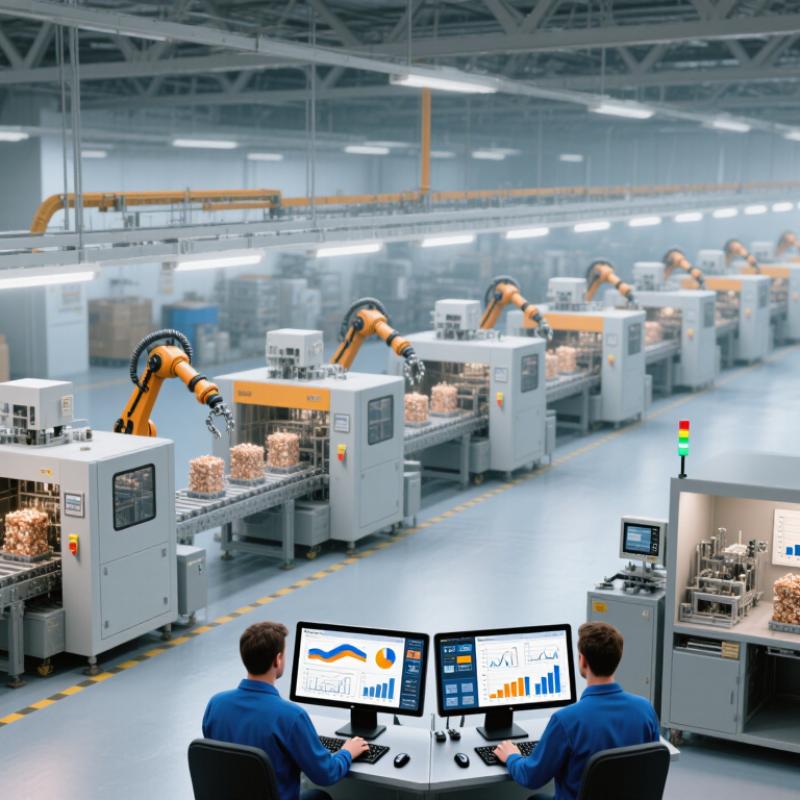
Choosing a complete Machinery Line can turn scattered equipment into one controlled production system. Materials move with fewer handoffs, sensors share data, and operators see problems earlier. The benefit is practical: steadier output, clearer traceability, and less time spent adjusting disconnected machines.

Deloitte’s 2024 Smart Manufacturing and Operations Survey found that 86% of manufacturing leaders expect smart manufacturing to become a primary competitiveness driver within five years. The report also highlights productivity, quality, and workforce challenges as major investment pressures. PMMI’s 2024 State of the Industry research similarly identifies automation, labor constraints, and equipment integration as continuing priorities for packaging manufacturers. These findings support a complete-line approach, but they do not guarantee success. Poorly specified interfaces can create expensive bottlenecks.

Dr. Jay Lee, a recognized authority in intelligent manufacturing systems, describes the objective clearly: “Smart manufacturing connects machines, people, and decisions.” A complete Machinery Line applies that principle on the factory floor. Imagine a filled carton leaving one station, receiving a readable code, passing inspection, and entering case packing without manual rework. That continuity matters.

However, integration requires more than buying more equipment. Product changeovers, cleaning access, maintenance skills, software compatibility, and spare-part support must be tested before installation. The cheapest line may become the costliest choice later. A careful business case should compare throughput, energy use, downtime, training, and lifecycle service. That honest review is often where the real advantage begins.
Why Choose a Complete Machinery Line for Your Business?

What Is a Complete Machinery Line?

Why Choose a Complete Machinery Line for Your Business?

What Is a Complete Machinery Line?

A complete machinery line is an integrated production system designed to handle several connected tasks. It may include feeding, processing, forming, inspection, packaging, and material transfer equipment. Each unit performs a specific function, while the full line manages the complete workflow.

Unlike separate machines, a complete line uses coordinated controls and planned material movement. Sensors can monitor speed, temperature, pressure, weight, or product position. Automated transfers reduce manual handling between stages. A central control system also helps operators track production data and respond to faults.

In practical projects, the line usually begins with a process review. Engineers study the raw materials, target output, available space, and required quality standards. They then match machine capacity and connection points. This prevents one fast machine from waiting for a slower unit.

A reliable line should also allow cleaning, inspection, maintenance, and future adjustments. Guarding, emergency stops, electrical protection, and documented operating procedures support safer operation. These details matter during real production, not only during installation.

No line is perfect.

A layout may look efficient on paper but create awkward access for maintenance. Operators may also need time to understand unfamiliar controls. Careful testing, training, and feedback can reveal these weaknesses before they become expensive interruptions. A complete machinery line succeeds when its equipment, people, and procedures work together consistently.
Which Machines and Systems Make Up the Production Line?

Why Choose a Complete Machinery Line for Your Business?

A complete production line connects material handling, feeding, processing, assembly, inspection, packaging, and storage. Each stage needs compatible controls, sensors, conveyors, and safety systems. A reliable line also includes compressed air, power distribution, dust collection, and wastewater management where required. The International Federation of Robotics reported 541,302 industrial robots were installed worldwide in 2023. This figure shows how automation is becoming a normal production element, not an optional upgrade.

The best line design begins with the product, not the machine catalogue. Engineers should map raw-material flow, cycle time, changeover frequency, and quality checkpoints. Vision inspection can detect surface defects, while weighing systems verify quantity. Programmable controls coordinate every station and record useful production data. Deloitte’s 2024 Smart Manufacturing and Operations Survey reported that 86% of manufacturers viewed smart manufacturing as a major competitiveness driver. Yet, software alone cannot repair poor layout or unstable feeding. That part is easy to underestimate.

Tips: Start with the bottleneck. Measure it. Leave room for maintenance access and future capacity. A slightly slower line may be more reliable. Real factories are rarely perfect, and my own planning experience suggests that early assumptions often need revision. Test materials under real humidity, temperature, and operator conditions before final purchasing. Specify spare parts, training, cleaning procedures, and response times in the technical agreement. These details protect output when one sensor fails at 2 a.m.

How Does a Complete Machinery Line Operate Step by Step?

A complete machinery line operates as a connected chain, with each stage preparing material for the next. It starts with receiving and inspecting raw materials. Weighing systems confirm the correct input volume. Sensors then check moisture, size, temperature, or weight. Operators inspect the readings. Small delays matter.

After preparation, feeders deliver materials at a controlled rate. Conveyors move them between processing stations with fewer manual transfers. At each station, motors, valves, and sensors follow programmed settings. An experienced technician checks pressure, speed, and vibration during production. Automation improves consistency, but it does not replace supervision. Still, automation is not infallible. A blocked sensor or loose belt can interrupt the entire line. Regular cleaning and preventive maintenance help detect these faults early.

Once processing ends, the finished output passes through inspection equipment. Sampling verifies quality against documented specifications. The control system records production data for traceability and process review. Packaging equipment then fills, seals, labels, and prepares units for storage. Before dispatch, staff check package integrity and production records. Not every line performs perfectly. Humidity, material variation, and operator fatigue can change results. A practical line design leaves room for adjustment, safe access, and clear emergency controls. Those details often determine whether daily operation remains stable.

Why Choose a Complete Machinery Line for Your Business? - How Does a Complete Machinery Line Operate Step by Step?

Step Process Stage Main Machinery Typical Input Key Operating Action Typical Output Main Control Point Typical Process Time
1 Raw Material Receiving Receiving hopper, conveyor, weighing system Bulk or bagged raw material Unload, weigh, identify, and route material into controlled storage Verified material with recorded batch weight Material identity, weight, moisture, and foreign-matter inspection 10–30 min per batch
2 Cleaning and Separation Vibratory screen, magnetic separator, air classifier Unprocessed raw material Remove stones, metal, dust, oversized particles, and other contaminants Clean material suitable for processing Screen aperture, air velocity, magnet condition, and contamination level Continuous
3 Size Reduction or Preparation Crusher, cutter, mill, peeler, or slicer Clean but irregular feed material Reduce particle size or prepare the material for uniform downstream treatment Prepared material with controlled dimensions Particle-size distribution, feed rate, blade or screen condition Continuous
4 Blending or Formulation Batch mixer, dosing unit, gravimetric feeder Prepared material and measured ingredients Dose components according to the approved formulation and mix uniformly Uniform blend with controlled composition Ingredient accuracy, mixing time, batch traceability, and homogeneity 5–20 min per batch
5 Primary Processing Press, extruder, forming machine, or thermal processor Prepared or blended feed Apply mechanical force, heat, pressure, or shaping to create the target product form Partially or fully processed product Temperature, pressure, residence time, feed rate, and product dimensions Continuous or batch-based
6 Drying, Cooling, or Conditioning Dryer, cooler, heat exchanger, or conditioning chamber Processed product with excess heat or moisture Control moisture and temperature to achieve storage and handling stability Cooled or dried product ready for finishing Outlet temperature, moisture content, airflow, and residence time 10–60 min
7 Inspection and Sorting Checkweigher, metal detector, vision system, sorting conveyor Finished or semi-finished product Detect and remove products outside defined quality limits Accepted product and separately recorded rejects Weight tolerance, foreign-object detection, appearance, and defect rate Continuous
8 Packaging Filling machine, sealing machine, labeling unit Approved finished product and packaging materials Fill, seal, label, code, and verify each package Sealed and identified saleable units Fill weight, seal integrity, label position, date code, and package count 20–120 packs/min
9 Case Packing and Palletizing Case packer, carton sealer, palletizer, stretch wrapper Individual sealed packages Group packages into cases and stabilize loads for transport Labeled cases and wrapped pallets Case count, pallet pattern, load stability, and shipping identification 5–30 cases/min
10 Storage and Dispatch Warehouse management system, pallet racks, loading equipment Finished pallets Store under defined conditions, rotate inventory, and release by shipment order Traceable shipments ready for delivery Stock accuracy, batch traceability, storage conditions, and dispatch records 15–45 min per pallet
Reference note: Process times and operating ranges are general engineering references. Actual values vary according to product characteristics, line capacity, automation level, formulation, package format, and required quality standards.

What Business Benefits Does an Integrated Machinery Line Provide?

Why Choose a Complete Machinery Line for Your Business?

An integrated machinery line connects feeding, processing, inspection, and packaging through one coordinated workflow. This design reduces manual transfers and keeps materials moving at a predictable pace. Less waiting. Fewer handoffs. That matters when labor costs and delivery pressure keep rising.

The 2024 Deloitte Smart Manufacturing and Operations Survey found that 92% of surveyed executives viewed smart manufacturing as a major competitiveness driver within three years.

A connected line supports that direction through shared data and synchronized controls.

Integration also improves visibility. Operators can review production speed, stoppages, temperature, and quality readings from one interface. A small jam becomes easier to locate before it disrupts an entire shift.

The International Federation of Robotics reported 541,302 industrial robots were installed worldwide in 2023.

This figure reflects growing investment in automated, repeatable production. However, automation alone does not guarantee better results. Poorly planned layouts can create expensive bottlenecks.

A complete line can reduce unnecessary floor movement and simplify staff training. Standardized settings also help maintain consistent output between batches. In practice, maintenance teams still need clear access around conveyors and inspection points. Otherwise, a compact design may become difficult to service.

Integration is helpful, but it requires accurate capacity planning, reliable sensors, and realistic operator feedback. The best system is not always the most complex one. Sometimes, a simpler line performs better because people can understand and maintain it.

How Should a Business Select and Implement the Right Machinery Line?

Selecting a machinery line should begin with the product, workspace, and daily output target. Do not start with catalog capacity alone. Measure raw material flow, floor space, power supply, staffing, and maintenance access. A line that produces quickly may still create costly bottlenecks.

In field projects, I compare three production scenarios: normal demand, seasonal peaks, and slower weeks. This reveals whether the equipment is flexible enough. Ask suppliers for documented cycle times, utility requirements, safety features, and service response procedures. Request a test using materials similar to yours. Numbers matter.

But plans can be wrong. Our early estimate once underestimated cleaning time by nearly two hours per shift. That mistake affected labor costs and delivery schedules. Leave space around each machine for inspection and repairs. Train operators before installation, not after a breakdown. Use a staged commissioning plan: inspect the site, install utilities, test each unit, then run the complete line. Record vibration, temperature, output, and rejected products during the first week. Keep spare wear parts available, but avoid buying everything at once. Speak with operators daily. Their practical observations often expose design problems that drawings miss. A reliable machinery line grows from verified data, careful implementation, and honest review.

Why Choose a Complete Machinery Line for Your Business?

A complete machinery line should be evaluated against the operational factors that most directly influence production performance, cost control, and long-term scalability.

The chart uses a 1–5 evaluation scale to compare the main selection criteria. Throughput capacity and total cost of ownership typically receive the highest priority because they directly affect output, operating expenses, and return on investment. Businesses should validate these scores using their own production targets, product mix, facility conditions, and service requirements.